
 Türkçe
 English
 Русский
Dehulling Plant
We design and manufacture complete shelling plants for the controlled cracking of sunflower seeds and the separation of the shell from the kernel. We design the process to support the efficiency of…
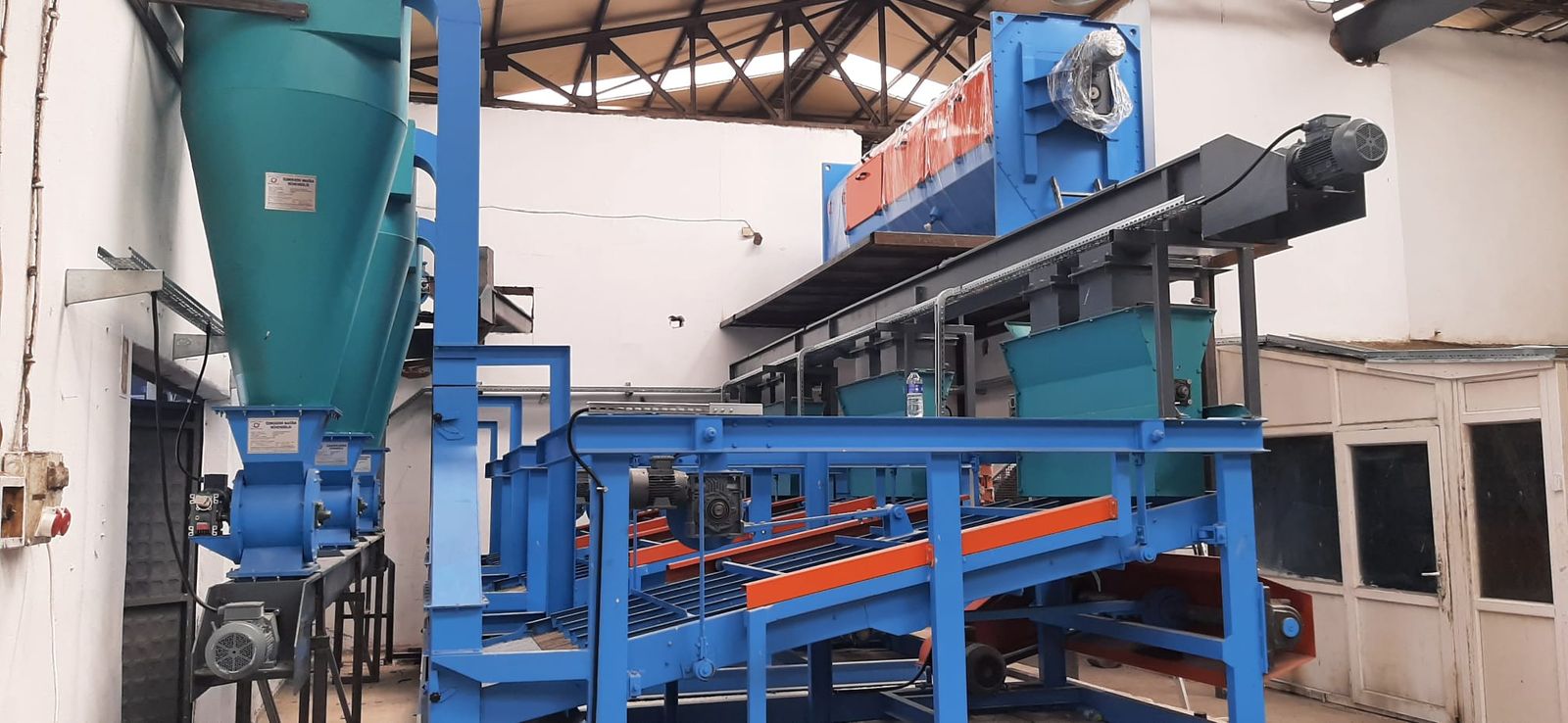
In sunflower seed processing plants, the dehulling process is applied to crack the seed in a controlled manner, effectively separate the hull from the kernel and obtain a product structure suitable for the subsequent production stages.
One of the main goals of dehulling is to reduce the hull content of the meal and thereby help achieve a higher protein value, while keeping the loss of oil and kernel carried out of the system with the hulls as low as possible. A successful dehulling process should therefore be evaluated not only by the amount of hull removed, but also by the amount of oil-bearing kernel carried in the separated hulls.
Özmodern Makina designs sunflower dehulling plants according to the properties of the raw material, plant capacity and target end-product specifications, and designs and manufactures the machinery and equipment required for the process.
Controlling Oil Loss in Hulls
Sunflower hulls contain a certain amount of oil originating from their natural botanical structure. This natural oil content should not be regarded as mechanical oil loss caused by the dehulling process.
The criterion applied in Özmodern dehulling systems is to limit the amount of oil-bearing kernel carried with the hulls during the process, over and above the natural botanical oil content of the hull.
Residual Oil in Separated Hulls: Max. 3% + Botanical Portion
Here, the "botanical portion" refers to the oil content originating from the natural structure of the sunflower hull, while the maximum 3% value refers to the mechanical oil loss carried with the hulls as a result of the dehulling process.
With this approach, the aim is to increase the dehulling rate while keeping under control the amount of valuable oil-bearing kernel carried out of the system with the hulls.
Key Features
- Capacity-specific plant design
- Controlled hull cracking
- Effective hull–kernel separation
- Helps increase meal protein value
- Control of mechanical oil loss
- Integration with pressing and extraction processes
Key Operational Benefits
- Higher meal protein value: Controlled separation of sunflower hulls reduces the fibrous hull content of the meal, supporting the production of higher-protein meal with greater commercial value.
- Controlled oil loss with the hulls: The dehulling process focuses not only on removing a high amount of hull, but also on not losing valuable oil-bearing kernel with it. The Residual Oil in Separated Hulls: Max. 3% + Botanical Portion criterion is one of the system's key performance indicators for this purpose.
- Less unnecessary hull load on the presses: By reducing the hull content, kernel with a higher oil content is fed to the press unit, helping to use press capacity more effectively for oil production.
- Longer life for press worms and wear parts: Reducing the amount of hard, fibrous hull lowers the abrasive and mechanical load inside the press, positively contributing to the service life of press worms and other wear parts.
- Lower solids and hull-related impurity load in crude oil: Reducing the hull content of the product to be pressed helps reduce hull-derived solids passing into the crude oil — an advantage for crude oil filtration and subsequent refining.
- Support for the extraction process: The oil cake structure obtained through controlled dehulling and proper pressing supports effective contact of hexane with oil-bearing particles, contributing to a more efficient extraction process.
- Less unnecessary mass load in the press and extraction line: Keeping excess, low-value hull out of the process reduces the unnecessary solids load on press, conveying and extraction equipment, so that plant capacity is used more effectively for processing valuable product.
- Use of separated hulls as an energy source: Sunflower hulls separated from the process can be used as boiler fuel in suitable combustion systems. This allows the plant to generate energy for process steam from its own by-product and reduce its need for external fuel.
- Lower energy costs: Using the thermal energy obtained from hulls within the plant can help reduce the energy costs of steam-consuming processes such as pressing, extraction and refining.
- Additional commercial income from hulls: Separated hulls not used for energy can be stocked under suitable storage conditions and sold as a by-product, turning hulls previously carried through the main process into a separately marketable product.
- Better use of the raw material's economic value: A dehulling system is not merely a process that raises meal protein; through control of oil loss, production of more valuable meal, reduced process load and the use of separated hulls as energy or a commercial product, it helps generate economic value from the different components of the raw material.
- A multi-faceted contribution to overall plant profitability: The economic benefit of dehulling does not come from a single point. When higher-value meal + controlled oil loss + more effective pressing and extraction + lower wear + energy or sales income from hulls are considered together, the dehulling unit becomes a process investment that supports plant economics on several fronts.
Gallery
Let's bring your project to life together
If you are looking for a reliable, experienced and solution-oriented partner for your vegetable oil plant, get in touch with us.